What Is Hyperbaric Oxygen Therapy? A Complete Guide
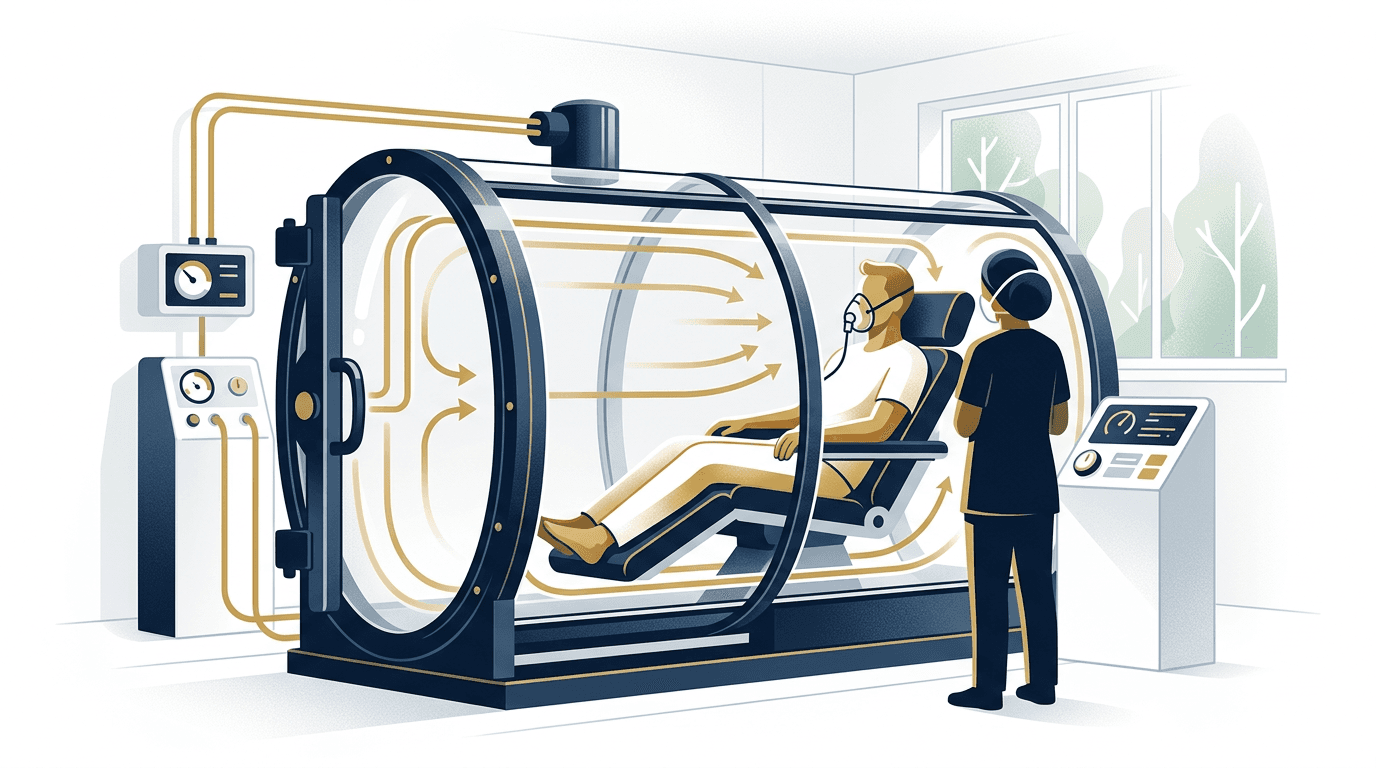
Hyperbaric oxygen therapy (HBOT) is a medical treatment where you breathe pure oxygen inside a pressurized chamber. The increased pressure — typically 1.5 to 3 times normal atmospheric levels — allows your lungs to absorb significantly more oxygen than they would under normal conditions. That extra oxygen dissolves into your blood plasma, reaching damaged or oxygen-starved tissues throughout your body to promote healing.
HBOT has been used in clinical medicine since the 1960s, and today it's one of the most well-established complementary therapies in wound care, diving medicine, and a growing number of other specialties.
How Hyperbaric Oxygen Therapy Works
The science behind HBOT is rooted in basic gas physics. Two principles drive the therapy:
- Henry's Law: The amount of gas dissolved in a liquid is proportional to the pressure of that gas above the liquid. By increasing atmospheric pressure, more oxygen dissolves directly into your blood plasma — independent of hemoglobin.
- Boyle's Law: Increased pressure reduces the size of gas bubbles in the body. This is why HBOT is the primary treatment for decompression sickness (the bends) in divers.
Under normal conditions, your blood carries oxygen almost exclusively bound to red blood cells. During HBOT, the dissolved oxygen in your plasma can increase by 10 to 15 times, reaching tissues that damaged or blocked blood vessels can't supply effectively.
What Happens in the Body
When oxygen-rich plasma reaches damaged tissue, it triggers several healing responses:
- Angiogenesis — stimulates the growth of new blood vessels
- Collagen synthesis — accelerates wound closure and tissue repair
- Reduced inflammation — modulates the immune response to decrease swelling
- Antimicrobial effects — high oxygen levels inhibit certain anaerobic bacteria
- Stem cell mobilization — increases circulating stem and progenitor cells
Types of Hyperbaric Chambers
There are two main categories of chambers used for HBOT, and the difference matters for treatment effectiveness.
Hard-Shell Chambers (Clinical Grade)
These are FDA-cleared medical devices found in hospitals and specialized clinics. They come in two configurations:
- Monoplace chambers — designed for one patient. You lie inside a clear acrylic tube while the entire chamber is pressurized with 100% oxygen. These are the most common type in outpatient clinics.
- Multiplace chambers — room-sized chambers that treat multiple patients simultaneously. Patients breathe oxygen through a mask or hood while the chamber is pressurized with air.
Hard-shell chambers can reach pressures of 2.0 to 3.0 ATA (atmospheres absolute), which is the range used for FDA-approved treatment protocols.
Soft-Shell (Mild) Chambers
Soft or portable chambers are lower-pressure devices (typically 1.3 to 1.5 ATA) that use concentrated oxygen rather than 100% pure oxygen. They're often marketed for wellness and recovery purposes.
It's worth noting that the FDA, UHMS (Undersea and Hyperbaric Medical Society), and AMA have raised concerns about soft chambers being used for medical conditions, as they operate below the pressures used in clinical research. If you're seeking HBOT for a specific medical condition, look for clinics with hard-shell chambers.
FDA-Approved Conditions
The FDA has cleared hyperbaric oxygen therapy for 14 specific conditions. Insurance is most likely to cover treatment for these indications:
- Air or gas embolism — air bubbles in blood vessels
- Carbon monoxide poisoning — including smoke inhalation
- Gas gangrene — clostridial myonecrosis
- Crush injuries — compartment syndrome, acute traumatic ischemia
- Decompression sickness — the bends
- Arterial insufficiency — certain acute blood flow problems
- Severe anemia — when transfusion is not an option
- Intracranial abscess — brain infections
- Necrotizing soft tissue infections — severe bacterial infections
- Osteomyelitis — refractory bone infections
- Radiation tissue damage — delayed radiation injury
- Compromised skin grafts and flaps — supporting surgical recovery
- Diabetic and non-healing wounds — the most common use of HBOT
- Sudden sensorineural hearing loss — idiopathic sudden hearing loss
Off-Label and Emerging Uses
Beyond FDA-approved indications, HBOT is being actively researched for a number of conditions. While insurance generally doesn't cover these, many patients seek treatment at independent clinics:
- Traumatic brain injury and concussion — one of the most actively researched areas
- Long COVID — emerging evidence for fatigue, brain fog, and exercise intolerance
- PTSD — studies showing improvements in brain function and symptoms
- Autism spectrum disorder — preliminary research showing some behavioral improvements
- Sports recovery — used by professional athletes for faster recovery
- Anti-aging and longevity — telomere lengthening and senescent cell research
What to Expect During a Session
If you've never done HBOT before, here's what a typical session looks like:
Before Treatment
- You'll change into cotton clothing (no synthetic fabrics or electronics allowed)
- A technician will explain the process and answer questions
- You'll be asked about any congestion or ear issues — clearing your ears is important during pressurization
During the Session
- Compression (5-10 minutes) — the chamber slowly pressurizes. You'll feel pressure in your ears, similar to descending in an airplane. Swallowing, yawning, or using the Valsalva maneuver helps equalize.
- Treatment (60-90 minutes) — once at treatment pressure, you simply breathe normally. Many patients relax, nap, or watch TV (in chambers with screens).
- Decompression (5-10 minutes) — the pressure gradually returns to normal.
After Treatment
Most people feel fine immediately after. Some report feeling slightly lightheaded or fatigued, which passes quickly. There's no downtime — you can drive home and resume normal activities.
Treatment courses typically range from 20 to 40 sessions, depending on the condition. Sessions are usually scheduled 5 days per week for FDA-approved conditions.
How Much Does HBOT Cost?
Cost is one of the most common questions, and it varies significantly by facility type:
| Facility Type | Cost Per Session | Notes |
|---|---|---|
| Independent clinics | $150–$400 | Most common range is $250–$300 |
| Hospital outpatient | $500–$2,500+ | Higher overhead, often insurance-billed |
| Membership/package deals | $75–$150 | For ongoing or wellness-focused treatment |
Insurance coverage: Medicare and most private insurers cover HBOT for FDA-approved conditions when provided at accredited facilities. Off-label uses are typically self-pay.
Many independent clinics offer package pricing that reduces the per-session cost by 20-30% when you pay upfront for a full treatment course.
How to Choose a Clinic
When evaluating HBOT providers, consider these factors:
- Chamber type — hard-shell chambers (monoplace or multiplace) are standard for medical-grade treatment
- Pressure capabilities — clinical protocols typically require 2.0+ ATA
- Physician supervision — look for clinics with a medical director or on-site physician
- Accreditation — UHMS accreditation indicates the facility meets safety and quality standards
- Experience with your condition — some clinics specialize in specific conditions
You can browse and compare HBOT clinics in our directory, filtering by chamber type, physician supervision, and conditions treated. We list over 2,400 clinics across all 50 states.
Safety and Side Effects
HBOT is generally considered very safe when administered by trained professionals in FDA-cleared chambers. Potential side effects include:
- Ear and sinus pressure — the most common issue, similar to flying
- Temporary myopia — minor, reversible vision changes after extended treatment courses
- Fatigue — mild tiredness after sessions
- Rarely: oxygen toxicity seizures (extremely uncommon at clinical pressures with proper protocols)
Contraindications include untreated pneumothorax (collapsed lung) and certain chemotherapy drugs. Always discuss your full medical history with the treating physician before starting HBOT.
Frequently Asked Questions
Is hyperbaric oxygen therapy painful? No. The only discomfort most people feel is temporary ear pressure during compression, similar to what you experience on an airplane. The rest of the session is comfortable and relaxing.
How long before I see results? This depends on the condition being treated. Some patients notice improvements after 5-10 sessions, while chronic conditions may require a full 40-session course before significant changes.
Can I do HBOT at home? Soft-shell chambers are available for home use, but they operate at lower pressures than clinical chambers. For medical conditions, treatment at a professional facility with hard-shell chambers is recommended.
Is HBOT the same as breathing from an oxygen tank? No. The key difference is pressure. Simply breathing supplemental oxygen (normobaric oxygen) doesn't achieve the same tissue oxygen levels as a pressurized chamber, because the increased pressure is what forces additional oxygen into the plasma.
How do I find a clinic near me? Search our directory by city, state, or zip code. You can filter by chamber type, conditions treated, and whether the clinic has physician supervision.
This article is for informational purposes only and does not constitute medical advice. Always consult a qualified healthcare provider before starting any treatment, including hyperbaric oxygen therapy.